
Gender / sexuality / italy
Select Issues
Select Categories

8.Contrade Ribelli

by Mariana Eugenia Califano

What do the names of streets tell us? What story do they tell, and why do they tell it? Can toxic narratives resulting from revisionism be defused? Contrade Ribelli is a short film, made almost exclusively with archival images from Resistenze in Cirenaica in collaboration with Solipsia, that tells the path of the permanent cultural site in Bologna, the genesis of the odonomastic guerrilla warfare,

Read more Download pdf
no post image

9.All’incrocio tra storia e memoria: Resistenze in Cirenaica

Mariana Eugenia Califano and Jadel Andreetto

Since the birth of nation-states in Europe, the politics of memory and oblivion have played a decisive role in the construction of a national identity, presumably shared by the majority of citizens. The conflict generated between contrasting memories is also expressed in places and their odonyms, in the spaces crossed daily by the selves and others orphaned of a mutual recognition. The toponymy that celebrates a determined event,

Read more Download pdf

10.An Intersectional Approach to Education

Watch the video contribution

by Valentina Migliarini and Rahma Nur 

The video contribution brings together a leading scholar and a teacher/activist from Europe who adopt an intersectional approach to educational research and practice. Intersectionality illustrated how some people are subject to multiple inequalities how their experience is not just the sum of its parts (Steinmetz, 2020). The conversation recorded in the video attempts to answer the following questions: what does it mean to utilize an intersectional stance to research in the European context?

Read more Download pdf

11.Vestiti semimaschili in Silent Cinema

by Robert A. Rushing

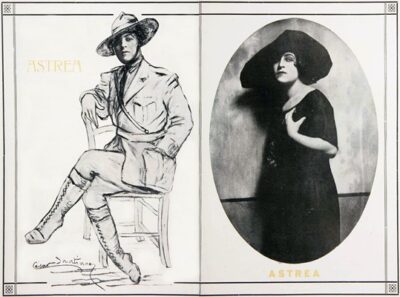
Following Laura Horak’s recent work (Girls Will Be Boys) on cross-dressing in early American film, this article examines, in some detail, three Italian silent films that make use of female-to-male cross-dressing: Histoire d’un Pierrot (1914), Filibus (1915), and Justitia (1919). Such films might be celebrated as subversive moments in the past in which more rigid gender norms were contested,

Read more Download pdf