
Gender / sexuality / italy

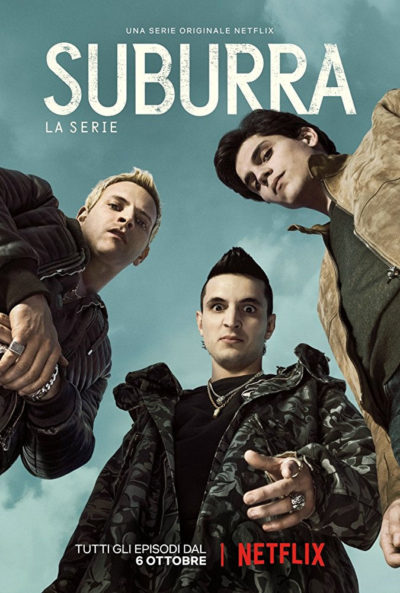
32. Michele Placido, Andrea Molaioli and Giuseppe Capotondi. Suburra: Blood on Rome (seasons 1-2)

33. Saverio Costanzo. L’amica geniale/My Brilliant Friend

Gender/sexuality/Italy 5 (2018) – Table of Contents
Table of Contents – Gender/sexuality/Italy, 5 (2018)
Nicoletta Marini-Maio, Journal Editor
Giovanna Faleschini Lerner and Nicoletta Marini-Maio, Themed Section Editors
Paola Bonifazio, Invited Perspectives Editor
Ellen Nerenberg, Open Contributions and Continuing Discussions Editor
Erica Moretti and Colleen Ryan, Book Reviews Editors
Laura Di Bianco, Film Reviews Editor
Erica Moretti and Victor Xavier Zarour Zarzar, Managing Editors
Sole Anatrone, Amanda Bush, Brian DeGrazia, Lisa Dolasinski, Alyssa Falcone,
Reproduction, Fertility, and Parenthood: The Italian Case. Journal Editorial
by Nicoletta Marini-Maio, Giovanna Faleschini Lerner, Paola Bonifazio, Ellen Nerenberg
The editorial includes the Editors’ introductions to their respective areas: Nicoletta Marini-Maio and Guest-Editor Giovanna Faleschini Lerner discuss the Themed Section; Paola Bonifazio presents the Invited Perspectives; and Ellen Nerenberg details the contents of the Open Contributions and the recently created section Continuing Discussions, which hosts informed voices on themes developed in previous issues of g/s/i.
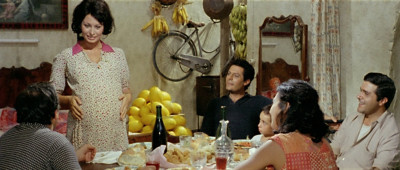
1. Di mamma ce n’è una sola. Misoginia maschile e rappresentazione del materno nella storia italiana contemporanea
In the history of many civilizations, the normative representation of motherhood has been one of the key instruments in the dominance men have established over women. This article focuses on the political function played by maternal stereotypes in modern Italian history, especially in protecting the integrity of masculine identity. Since the nineteenth century, misogynistic discourse has emphasized women’s “natural” destiny, restricted to family life and reproduction. Yet even in the twentieth century, when virilistic rhetoric based on the biological inferiority of women started to fail,
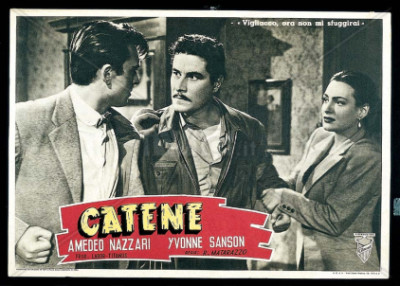
2. The Ideal Man: Amedeo Nazzari, Fatherhood, and Italy’s Melodramatic Masculinity
This article investigates the stardom of Amedeo Nazzari, both in his pre-war cinematic roles as war hero, and in post-war cinema, where he played the pater familias in a series of melodramas directed by Raffaello Matarazzo and produced by Titanus from 1949 to 1954. While Fascism conceptualized heroism as action and patriotic sacrifice, post-war Italian screen culture redefined the coordinates of heroism through new impersonations of suffering masculinity. Nazzari’s stardom, moving from roles of military virility to melodramatic father figures,

3. The Secret Pill: AIED, Fotoromanzi, and Sexual Education in 1970s Italy
In 1975, the Associazione Italiana per l’Educazione Demografica (AIED) sponsored the publication of three fotoromanzi as part of a larger campaign effort to educate Italians on the benefits of birth control and the low risks of the contraceptive pill. Against the idea that romances could only be apolitical and escapist tools, the stories of relationships narrated in the AIED fotoromanzi aimed at spreading behavioral models that were deemed appropriate by its sponsor’s policy of public health.
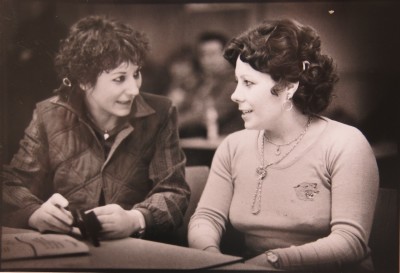
4. Emigrazione, maternità ed emancipazione ne Il valore della donna è il suo silenzio
This paper aims at analyzing Gertrud Pinkus’s docu-fiction Il valore della donna è il suo silenzio (1980), a Swiss and German coproduction, its genesis, and its circulation amongst Italian migrant women in Switzerland. Pinkus’s film is one of the few works of the twentieth century that deals with Italian emigration from a gendered perspective. It tells the story of a woman who emigrates from the South of Italy to the city of Frankfurt.

5. Media-ting “Sterile Masculinity”: On Male Aging, Migration, and Biopolitics in a (post)Berlusconi Italy
This article intervenes in current discussions on perceptions of aging, masculinity, and (in)fecundity, and their combined effect on perceptions of Italy. The first half of this piece centers on Berlusconi and the broader phenomenon of Berlusconismo. Drawing on queer theorist Lee Edelman’s notion of “reproductive futurism,” and works by Italian philosophers and scholars (Ida Dominijanni and Lorenzo Bernini) who bring together theories of psychoanalysis and biopolitics in their analyses of Berlusconi/Berlusconismo,