
Gender / sexuality / italy
Select Issues
Select Categories
no post image

5.Eowyn (1976-1982): politica, fantasy e genealogia femminile a destra

by Jordi Valentini

Seeking to counteract left-wing youth movements in the shared terrain of alternative publishing, right-wing youth in the 1970s discovered and appropriated Tolkien’s work, partly due to the general disdain or indifference towards him from the Italian left-leaning public and intellectuals. Tolkien’s anti-modern and traditionalist world became a refuge for a disillusioned generation critical of the Italian Social Movement (Movimento Sociale Italiano), the main conservative party, for its outdated structure and its unwillingness to give younger people a voice.

Read more Download pdf

6.Almost like a Virgin: Strategic Appropriation of Marian Symbolism, femminismo della differenza, and Fascist Feminism in Giorgia Meloni’s “Reverse Discourse.”

by Diletta Pasetti and Nicoletta Marini-Maio

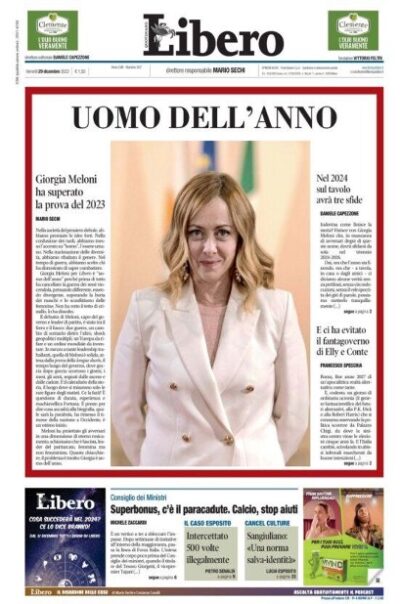
This article undertakes a critical examination of Giorgia Meloni’s self-narrative of professional success and motherhood, situating it in dialogue with the symbolic and theological constructs associated with the Virgin Mary. By drawing on Mariological discourse, the study interrogates how Meloni’s articulation of her personal and political identity leverages iconic representations of femininity to reinforce or subvert established paradigms of gender and authority. It explores how Meloni draws on Mariology to shape her views on female agency and women’s roles in society,

Read more Download pdf

7.“Il Presidente” Giorgia Meloni. Right-Wing “Feminism,” Queerness, and Gender Neutrality in Contemporary Italian Politics

by Amanda Minervini

Gender neutrality has recently entered the discourse on and within Italian language and culture while the war among genders is still unresolved. Teaching genderneutral/nonbinary Italian is a form of activism, and a way to teach inclusively while responding actively to changes occurring in both US and Italian culture. In this context, which shows how a portion of Italian speakers wants to move towards inclusion and modernity, the Prime Minister Giorgia Meloni,

Read more Download pdf
no post image

8.Giorgia Meloni’s Italy: Conservative Feminism / Femminismi di destra. In conversazione con Dacia Maraini, Flavia Perina, Marina Terragni, and Nathasha Edirippulige Fernando

by Ombretta Frau and Juliet Guzzetta

We envisioned this Invited Perspectives section as a space for dialogue with Italian public intellectuals from different political backgrounds, experiences, and even evolving positions. To our delight, Nathasha Edirippulige Fernando, Dacia Maraini, Flavia Perina, and Marina Terragni agreed to participate in our project. Our goal for this section was to discuss women and feminism in Italy in a succinct and direct manner following Prime Minister Giorgia Meloni’s historic election.

Read more Download pdf

9.Maka: un processo collaborativo raccontato a tre voci

by Geneviève Makaping, Elia Moutamid, And Simone Brioni

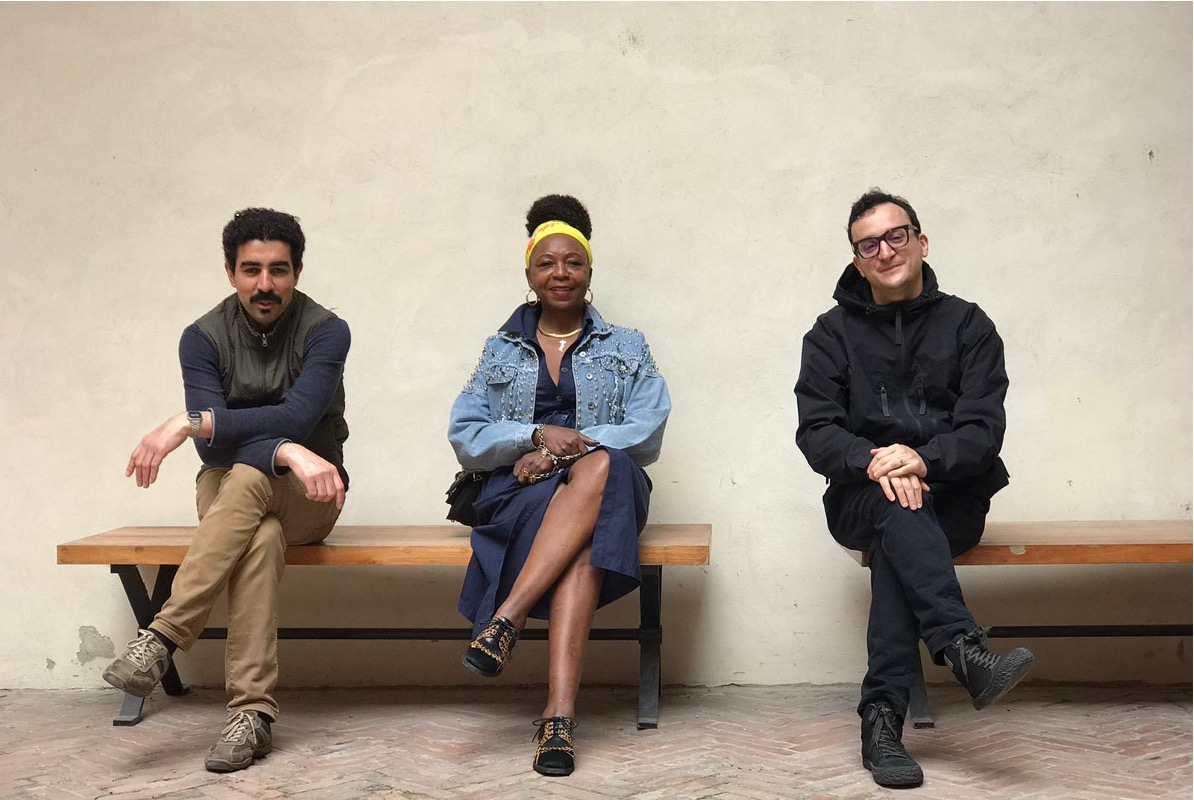
Maka offers an account of Makaping’s journey of migration from Cameroon across the desert and the ocean, her arrival in Italy in 1982 following the tragic death of her partner, her success as a journalist and television host, and her more recent relocation to Mantua. Maka focuses on questions of national belonging, and it reflects on how the perception of migration and race has changed since Makaping first came to Italy in the 1990s.

Read more Download pdf
no post image

10.The Redemption of Eve: The Decameron as New Genesis

by Brittany Asaro

Giovanni Boccaccio’s Decameron (1349-51) has long been regarded as a secular celebration of humanity. Yet, his choice of title—a play on hexameron—frames his short story collection as a gloss on Genesis. In this essay, I argue that the author’s reevaluation of scripture is an essential part of his vision of a post-plague society in which gender roles have been redefined. Boccaccio challenges traditional interpretations of the biblical account of humanity’s creation and fall,

Read more Download pdf
no post image

11.A Case in Transformation: Gender Bender Festival, from Cinema to Dance

by Dianora Hollmann

This article examines the interdisciplinary festival Gender Bender, based in Bologna, Italy. Since its first edition in 2003, the festival has centered cinema as its core discipline, and from 2014, it introduced a new key section dedicated to contemporary dance. This case study investigates the shift in the festival’s programming, which is now more focused on dance than cinema, and explores the potential for dual positioning within both the film festival circuit and contemporary dance networks.

Read more Download pdf