

category: Open Contributions

no post image

11. Fifty Shades, Feminism and Gender Stereotypes: Notes on Researching BDSM

by Laura Zambelli

In this article I develop some reflections on my research on BDSM (bondage, domination and submission, sadism and masochism) in Italy. I comment the success of the book Fifty Shades paralleled by a tepid welcome received from the BDSM community of Milan, Italy. Empirical research on BDSM in Italy is, and was, not widespread; I briefly present the existing academic literature. Then, I reflect on the connections between BDSM and feminism both internationally and in the Italian context,

Read more Download pdf
no post image

12. Nessuno tocchi Guizzino. Gli albi illustrati in Italia tra “teoria gender,” false interpretazioni e censura.

by Simone Fornara

Picture books are a genre of children’s literature with enormous educational potential. Their use in classrooms is currently spreading and should be further encouraged. Picture books are particularly suitable for the treatment of sensitive issues, such as those related to gender. For this reason, many educational projects are focused on reading picture books and aim at promoting them, in and outside of the classroom. But in reality, these projects have to face opposite points of view,

Read more Download pdf

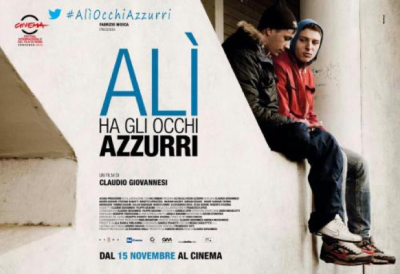
13. Precarious Masculinity: Intersections of Race, Gender, and Desire in Claudio Giovannesi’s Alì ha gli occhi azzurri

by Lisa Dolasinski

This article examines the precarious masculinity performed by Nader Sarhan, the male migrant protagonist featured in Claudio Giovannesi’s Alì ha gli occhi azzurri (2012). The theoretical framework draws on scholarship from postcolonial studies, film theory, queer theory, and gender studies. In particular, following recent work on representations of non-national male migrant film protagonists as “queer” and thus inassimilable to the national Italian body, the author contends that Nader’s desire for “white,” hegemonic masculinity (sexual and civic) ultimately results in his own undoing.

Read more Download pdf
no post image

14. Postcolonial Abjections: Physical and Moral Corruption in Rhoda by Igiaba Scego

by Jessica Sciubba

This article explores the trajectories of moral and bodily abjection in Rhoda by Igiaba Scego. Drawing principally on Judith Butler’s theory of social abjection and on her critique of the heteronormative discourse, this article identifies the importance of the heteronormative imperative in the shaping of gender roles and points at the abject status acquired by those identities that do not conform to this norm. The complexity of Rhoda’s relationship with her body and with her sexuality represents a key point in the further developments of her abjectifying trajectory;

Read more Download pdf

The Fifty Shades of (the) Grey (Zone), or, the Absent BDSM Essay in the g/s/i Issue on Domination

The Fifty Shades of (the) Grey (Zone), or, the Absent BDSM Essay in the g/s/i Issue on Domination. Open Contributions Editorial

by Ellen Nerenberg

“The Fifty Shades of the Gray Zone” explores the reception of E. L. James’ bestselling trilogy, Fifty Shades of Grey, and the reception of the print and film versions in Italy.

DOI: https://doi.org/10.15781/7qvh-5c48

Read more Download pdf
no post image

15. (Self)Representations of Motherhood in Ada Negri’s Stella mattutina

(Self)Representations of Motherhood in Ada Negri’s Stella mattutina

by Ioana Raluca Larco

This article focuses on the figure of the mother as represented in Ada Negri’s autobiographical novel Stella mattutina (1921); such an image transgresses the patriarchal model of the passive and self-sacrificial woman-mother, so predominant in the 1800’s and the first half of the following century. Through feminist lenses (i.e., Jessica Benjamin, Luisa Muraro), I discuss how Negri restores here the mother’s subjectivity by depicting her also as an individual,

Read more Download pdf
no post image

16. Matteo Garrone’s Gomorra: A Politically Incorrect Use of Neapolitan Identities and Queer Masculinities?

Matteo Garrone’s Gomorra: A Politically Incorrect Use of Neapolitan Identities and Queer Masculinities?

by Marcello Messina

Taking as a starting point John Champagne’s recent argument about the queer representations of Italian masculinity contained in Garrone’s Gomorra, this paper aims to connect the queer masculinity of the film’s characters with the negative judgement on their lives and actions suggested by the film. In particular, it will be argued that queerness is used alongside the Neapolitan-ness of the characters to portray them as Others,

Read more Download pdf
no post image

17. Subverting Masculinity or Suppressing the Unmanly? Gender Alterity in Palazzeschi and Capuana’s Treatment of the Incorporeal Man

Subverting Masculinity or Suppressing the Unmanly? Gender Alterity in Palazzeschi and Capuana’s Treatment of the Incorporeal Man

by Martina O’Leary

“Subverting Masculinity or Suppressing the Unmanly?” presents a critical examination and comparison of unreal corporeal depictions of masculinity in Palazzeschi’s Il codice di Perelà and Capuana’s ‘L’invisibile’. These works present strikingly similar protagonists, who themselves affirm the attribute of lightness to be their defining characteristic, and who are made of,

Read more Download pdf